Serious land buyers do not fall for pretty photos. They want proof that a Brooksville parcel is usable, buildable, and worth the price. If you are selling acreage in Hernando County, the fastest way to attract qualified offers is to answer those questions up front. In this guide, you will learn exactly what to document, how to present it online, and where to verify the details locally so real buyers can move with confidence. Let’s dive in.
What serious buyers verify first
Confirm legal road access
Buyers start with access. Spell out whether the parcel fronts a public, county-maintained road or uses a recorded private easement. State if a driveway exists and whether a new driveway or culvert permit will be needed. Hernando County Public Works explains residential driveway and right-of-way approvals, so reference their process to set clear expectations for buyers. Review the county’s Right-of-Way Use Permit page to understand what applies to your parcel: Hernando County Public Works right-of-way guidance.
Document utility availability
Outside of city service areas, most buyers expect a private well and septic. If you believe public water or sewer may be available, request a written response from Hernando County Utilities. A capacity or availability letter reduces uncertainty and weeds out tire-kickers. Use the county’s form to start the process: HCUD utilities capacity request form. For power, many parcels are served by Withlacoochee River Electric Cooperative; confirm service and meter availability directly with the utility.
Show septic and well readiness
If the property is not on public sewer, buyers often require proof that a septic system is feasible. Provide a site evaluation or an approved septic permit when possible. The Florida Department of Health in Hernando County outlines permit steps, site plan requirements, and inspections. Share or cite those standards rather than making broad claims like “septic ready.” See the DOH process here: Hernando County DOH septic permit information.
Clarify zoning and permitted uses
State the zoning district and summarize common permitted uses in plain language. Serious buyers want to know if they can build a home, keep horses, run a hobby farm, or pursue other allowed activities. Hernando County’s zoning code lists permitted and special-exception uses, plus dimensional limits and some pre-1990 parcel provisions. Reference the code section so buyers can verify: Hernando County Zoning Code, Appendix A.
Address buildability: soils, flood and wetlands
Include a simple statement on soils and drainage, FEMA flood zone, and whether wetlands are present. Buyers often start with public tools for a preliminary check. Link to the NRCS Web Soil Survey for soils and infiltration tendencies and to FEMA’s Flood Map Service Center for flood status:
Price with real comps
Land pricing hinges on buildable acres, access, frontage type, utility status, and encumbrances. Pull recent closed sales of similar-size parcels and adjust for these drivers. The county’s parcel and sales data helps you cross-check acreage, improvements, and tax history: Hernando County Property Appraiser.
Show it online to filter for quality
Map and parcel details buyers need
Post a clear parcel map over aerial imagery with the Parcel ID or Parcel Key. A quick visual helps buyers confirm access, neighboring parcel patterns, and proximity to main roads. You can export map images from the county’s planning maps and parcel viewer: Hernando County Central GIS planning maps.
Photos that actually sell land
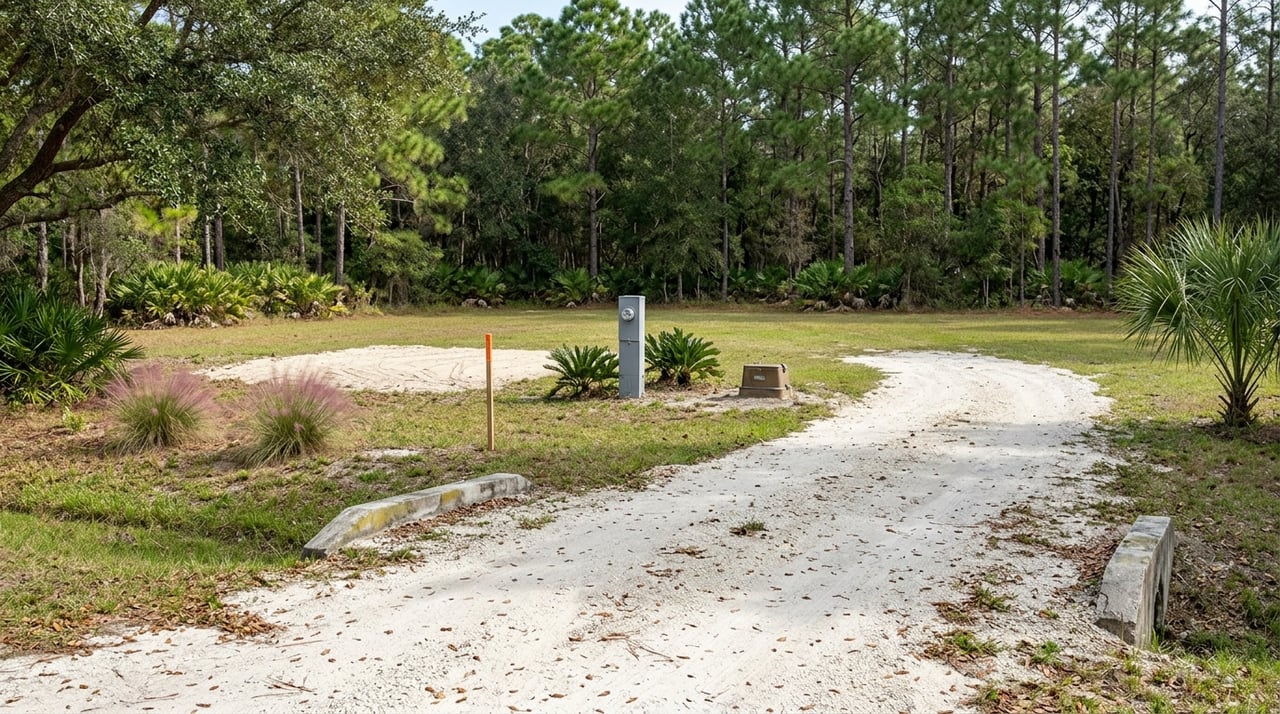
Go beyond a pretty gate shot. Include the approach and road frontage, any existing driveway or culvert, likely build sites, cleared areas versus wooded areas, and any visible utilities. Drone obliques can help convey scale and layout, but follow FAA rules and keep images true to site conditions.
Bulleted facts that qualify buyers fast
Use a short, scannable set of bullets at the top of your listing. Focus on decision triggers and how they were verified:
- Zoning district and common permitted uses (with code reference).
- Water and sewer status, plus whether an HCUD capacity letter is available.
- Septic status: permitted system, site evaluation on file, or buyer to verify.
- Access type: county road or recorded private easement; driveway permit status.
- FEMA flood zone and any known wetlands or conservation areas.
- Parcel ID/Parcel Key and any recorded easements or covenants.
Be upfront about constraints
If part of the parcel is in a flood zone, near wetlands, or limited by a conservation easement, say so. Buyers appreciate transparency and are more likely to write clean offers when constraints are known.
Documents that win offers
Provide these items in the listing or upon request. They speed underwriting and reduce renegotiations:
- Recent boundary survey or ALTA-style survey. Clean boundaries reduce title delays.
- Recorded deed and plat (if applicable), with the official-records reference so buyers can verify.
- Septic file: site evaluation results, permit records, or system verification. Use DOH’s process as your standard.
- Well information: well log, pump details, recent water test. If public water is feasible, include the HCUD response.
- Utility availability or capacity letter for water and sewer from HCUD.
- Simple topographic or contour sketch if drainage or elevation matters.
- Environmental reports as relevant: wetlands delineation, conservation easements, or karst/sinkhole studies.
- Road maintenance or access agreements if the road is private or access is by easement.
- Current tax bill and, if applicable, agricultural classification or timber documentation.
Local rules to confirm before you list
Zoning and lot splits
If you plan to market the land as potentially subdividable, check the current zoning district and any special provisions that may apply to parcels created before 1990. Lot splits and Class D subdivisions require county review and may trigger driveway location approvals. Start with the county zoning code for permitted uses and dimensional limits.
Driveway and right-of-way approvals
Any work in the county right-of-way typically needs Public Works approval. If a new residential driveway or culvert is required, explain that in the listing and note whether you have written clearance. This sets realistic closing timelines and attracts buyers who can proceed under those terms.
Utility documentation
If public water or sewer is relevant, obtain a capacity or availability response from HCUD and reference it clearly. This simple step prevents deal-killing surprises during inspections.
Price for today’s market
- Pull closed land sales of similar acreage within a practical drive radius of Brooksville. Use the county property appraiser for parcel history and map context.
- Adjust for core value drivers: legal access, utility status, net buildable acres after wetlands and floodplain, frontage type and length, and any special entitlements or conditional uses.
- If you plan to price with a hypothetical split, label it as speculative unless you have county pre-application feedback in hand. Serious buyers will respect the clarity.
Avoid common pitfalls
- Saying “septic ready” without a site evaluation or permit on file. Reference DOH standards and provide documents instead of claims.
- Vague utility statements like “close to utilities.” State exactly what is available and cite your HCUD letter or explain why onsite systems are needed.
- Unclear or unrecorded access. Title companies and lenders expect recorded access or a recorded easement. Confirm and disclose.
- Overlooking flood zones, wetlands, or conservation restrictions. Disclose early to build trust and avoid late-stage renegotiations.
Quick seller checklist
- Parcel ID or Parcel Key and a clean parcel map export.
- High-resolution photos, including road frontage, approach, likely build site, and any well or septic features.
- Bullets that cover zoning, utilities, septic status, access type, and flood zone.
- Documents ready to share: survey, deed and plat, septic file or site evaluation, well log or water test, HCUD capacity letter, topo sketch, environmental reports, and any road agreements.
- A short statement explaining what you can provide at contract and what the buyer should verify during due diligence.
Who to contact in Hernando County
- Planning and Zoning for district questions, permitted uses, setbacks, and pre-application guidance.
- Public Works for driveway and right-of-way approvals.
- Utilities (HCUD) for water and sewer availability and capacity responses.
- Florida Department of Health in Hernando County for septic permitting and site evaluations.
- Property Appraiser for parcel data, sales history, and tax records.
- Central GIS for parcel maps, aerials, and flood overlays.
When your listing answers a serious buyer’s questions up front, you attract stronger offers and shorter timelines. If you want a clear, local plan to package your Brooksville acreage with the right maps, documents, and pricing, connect with Brian Kupres for a conversation that fits your goals.
FAQs
How do I prove legal access for a Brooksville parcel?
- Confirm the frontage road status, provide any recorded easements, and reference whether a driveway or culvert permit from Public Works will be needed, then include that in your listing.
What should I include in an acreage listing to attract serious buyers?
- Lead with zoning and permitted uses, utility and septic status, access type, FEMA flood zone, Parcel ID, and a parcel map, plus a short list of documents available upon request.
How do buyers verify septic feasibility in Hernando County?
- Provide a site evaluation or septic permit record from the Florida Department of Health in Hernando County, or explain the steps and timing if the evaluation is in progress.
How can I check soils, wetlands, and flood risk before pricing?
- Run a preliminary soils map with NRCS Web Soil Survey, review FEMA flood maps, and consult a wetland professional if aerials suggest potential jurisdictional areas.
Can I split my Brooksville acreage, and should I market that potential?
- Check your zoning district’s minimum lot size and any pre-1990 provisions, then consult Planning and Zoning; if a split seems feasible, label it as preliminary unless you have county feedback.